Adriana Roche
Productive Friction: Why Elite Tech Teams Design for Disagreement
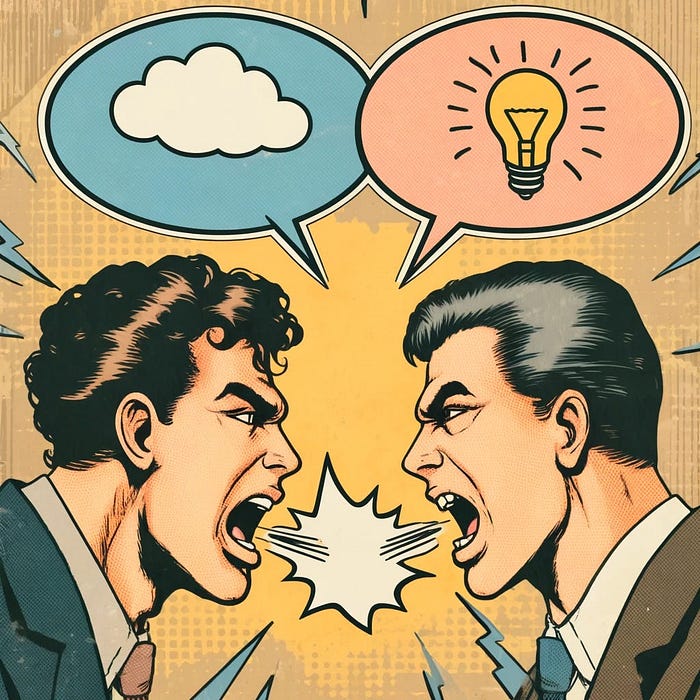
Too many teams treat conflict like a bug when it’s actually a feature.
I’ve seen this play out over and over again — founders hire smart, capable people, but instead of pushing each other toward better decisions, the team falls into groupthink. They avoid tough conversations. They prioritize harmony over progress. And in the process, they make weaker decisions.
Workplace conflict can increase engagement, empathy, and communication when approached positively. The best teams don’t just tolerate disagreement — they design for it. They create systems that turn friction into fuel for better ideas, sharper execution, and long-term resilience.
Here’s how.
1. The Three Most Common Types of Conflict
Conflict happens at three levels, and ignoring any of them is a missed opportunity:
Inner Conflict: The doubts, biases, and emotions we bring into a discussion. If someone grew up in an environment where conflict felt dangerous, they’ll default to avoiding it — even when it’s necessary. Example: A product manager with a challenging family background might refrain from pushing back on unrealistic timelines, even when they know the schedule will lead to burnout or quality issues.
Interpersonal Conflict: Tensions between individuals due to different communication styles, priorities, or values. This is the classic “product vs. engineering” or “visionary CEO vs. pragmatic COO” dynamic. Example: A design-focused founder repeatedly clashes with her operations-minded co-founder. The designer wants to perfect the user experience before launch, while operations wants to ship quickly and iterate. Without addressing this tension, every product decision becomes a battlefield.
Group Conflict: The larger team or organizational tensions that come from unclear roles, competing goals, or cultural misalignment. If one team prioritizes speed and another prioritizes risk management, but no one talks about it, things fester. Example: The marketing team consistently promises features to customers before engineering has committed to delivery dates. Instead of establishing a proper process for product announcements, both teams develop resentment and blame each other for missed expectations.
Most companies try to “solve” conflict by minimizing it — hiring for “culture fit,” layering process on top of disagreement, or waiting for it to resolve itself. But the healthiest teams embrace these tensions and find ways to surface them early, often, and productively.
2. The Three Ways People Handle Conflict — And How to Course-Correct
Before we talk about how to build constructive disagreement, let’s talk about what usually happens instead. According to author and mediator Diane Musho Hamilton, most people default to one of three styles:
The Silent Treatment
Avoidance — The “let’s just not talk about it” approach. This leads to bad ideas surviving too long, passive-aggressive behavior, and resentment.
Signs: Silent meetings, lack of debate, vague Slack messages about “concerns.”
Example: A team member notices a major flaw in the company’s new pricing strategy but stays quiet during the planning meeting. Three months later, the pricing rollout fails for exactly the reason they predicted but never shared.
Fix it: Create structured opportunities for debate (weekly pre-mortems, dissenting opinions in decision docs). Try implementing a “concerns round” in meetings where everyone must voice at least one potential issue.
The Bulldozer
Aggression — The “my way or the highway” approach. This gets mistaken for strong leadership, but it shuts down creative thinking and discourages people from speaking up.
Signs: The loudest person in the room always wins, junior employees stay quiet, and ideas get dismissed too quickly.
Example: A CTO who interrupts engineers during presentations and dismisses their technical concerns without fully understanding them. The engineering team stops bringing up potential problems, leading to technical debt that could have been avoided.
Fix it: Leaders should model curiosity over certainty — instead of “That won’t work,” try “What would make that work?” Implement a rule where no idea can be criticized until at least three clarifying questions have been asked.
The Yes Person
People-Pleasing — The “go along to get along” approach. These people love the team but fear rocking the boat. The result? Mediocre decisions that feel great in the moment but fail under pressure.
Signs: Excessive agreement, decisions that shift after the meeting, lack of strong opinions.
Example: A startup’s leadership team unanimously approves a risky pivot because no one wanted to challenge the enthusiastic CEO. In private conversations afterward, several executives express doubts they should have voiced during the decision process.
Fix it: Assign someone in every meeting the role of challenger — not to block decisions, but to stress-test them. Rotate this role so everyone develops the skill of constructive dissent.
Figure out which default behaviors show up in your team. If people are avoiding conflict, you need to push for clarity. If aggression is the problem, you must model a different way of debating.
3. How to Build a Culture Where Disagreement Feels Safe
The best teams don’t just permit disagreement — they make it expected.
Lead by Example
Model the behavior — Founders, if you never change your mind after a debate, you’re not actually listening.
Exercise: Public Mind-Changing As a leader, explicitly acknowledge when someone’s argument has changed your perspective. “I came into this meeting thinking X, but after hearing Jane’s points about Y, I’m now convinced we should do Z.”
Change Your Language
Lead with inquiry, not contradiction — Instead of saying, “That won’t work,” try:
“What would need to be true for this to work?”
“What’s the counter-argument?”
Exercise: Question-to-Statement Ratio Challenge your team to track the ratio of questions they ask versus statements they make in meetings. Aim for at least 1:2 to ensure exploration happens before conclusions.
Democratize Dissent
Rotate dissenting roles — Some people are naturally more comfortable pushing back than others. Make it a structured part of discussions so everyone gets reps in disagreeing productively.
Exercise: Dissent Rotation. Create a “dissenter” role or “contrarian teams” that rotate through the team for important meetings. The job is to find the holes in the prevailing thinking, regardless of their personal opinion.
Learn from Conflict
Normalize post-mortems — Teams that never debrief mistakes will repeat them. Make it routine to say, “What would we do differently next time?” without blame.
Exercise: Blameless Post-Mortems After every major project or decision outcome (good or bad), conduct a 30-minute review focused on process improvement, not finger-pointing. Start with “What went well?” before discussing “What could we improve?”
Address System Issues
Don’t let group conflict go unspoken — If teams are clashing because of misaligned incentives, surface it explicitly. It’s easier to fix misalignment than to fix resentment.
Exercise: Competing Commitments Exercise When teams are in conflict, have each group articulate their primary objectives and metrics. The source of tension is often that success is defined differently across departments.
4. Finding the Right Balance: When Too Much Conflict Becomes Counterproductive
While healthy disagreement drives better outcomes, there’s a point where conflict can become excessive and harmful. Here’s how to recognize and address that balance:
Warning Signs of Excessive Conflict
Discussions that never reach a resolution
Team members becoming emotionally drained
Conflict spreading to personal rather than professional matters
Decision paralysis from the constant reopening of settled issues
Setting Boundaries for Productive Disagreement: Creating conflict containers — specific times and forums for debate — helps ensure disagreement doesn’t consume all of your team’s energy. Consider implementing:
Debate time limits (20 minutes max for most topics)
Clear decision rights (who makes the final call when consensus isn’t reached), like DACI
Conflict-free zones (certain meetings or channels where implementation is discussed, not debated)
Remember that the goal isn’t conflict for conflict’s sake — it’s better decision-making. If your team spends more time arguing than building, you’ve crossed from productive tension into dysfunctional territory.
Conclusion: Build Teams That Can Disagree and Execute
If you’re a founder, take a hard look at how your team engages with disagreement. Because your culture isn’t defined by the values on your Notion page — it’s defined by how your team makes decisions under tension.
Your Action Plan:
In your next team meeting, identify which conflict style dominates your team culture
Implement at least one of the exercises from this post in the next two weeks
Schedule a follow-up discussion to reflect on how productive disagreement has changed your decision-making process
And if no one is disagreeing, that’s the real red flag.