Amy Saper
#SheInspiresMe: My trailblazing grandmother, the nuclear engineer
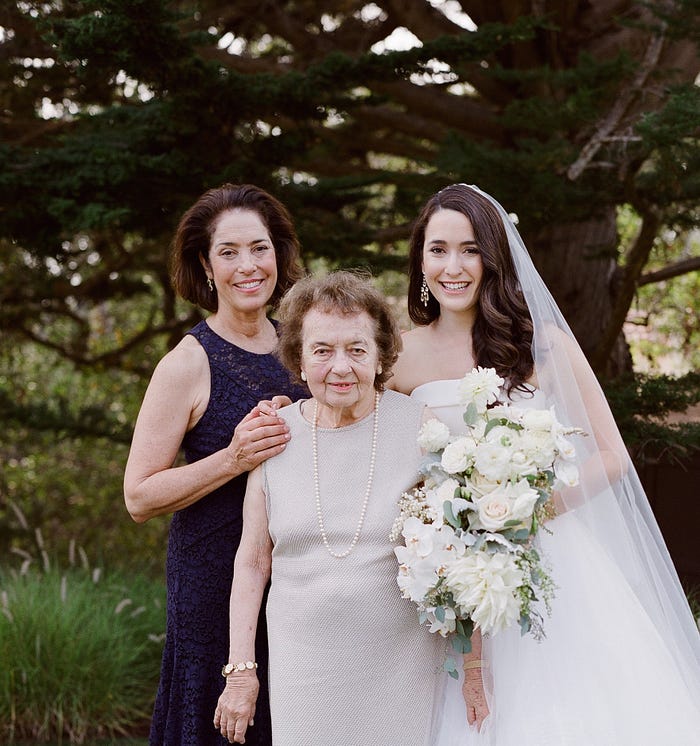
I grew up knowing women were meant to work in science and technology. My mother is a physician and my grandmother was a nuclear engineer, so it was the most natural thing in the world to me. Just as I assumed that all mothers did strep throat tests at the kitchen counter (until I met a kindergarten classmate who missed school to go to the doctor for such a test), I assumed that STEM fields were filled with primarily women, like my mother and grandmother.
My grandma (who passed away almost exactly a year ago today), was a force of nature, and my original role model. She was brilliant, passionate, motivated and — ever the Bronx native — she had absolutely no filter, ever. A Columbia-educated chemical engineer, she led groundbreaking work as manager of international fusion research projects for the U.S. Department of Energy.
Sharing my grandmother’s love for math and science had its pros and cons. While I loved being able to relate to her by sharing details of the courses I took, I earned no sympathy when I challenged myself. One Thanksgiving, I complained about my Ordinary Differential Equations course (Math 53, as Stanford grads may remember), and she interrupted me to quip, “ODEs are *not* complicated, Amy.” And they weren’t — not to my brilliant grandmother, anyway.
In so many ways, she was a living contradiction. She was a trailblazing, glass-ceiling shattering, female engineer, and for most of her career, the only woman on a business trip, in a room, or as an author of a scientific paper. Yet, perhaps unsurprisingly, given her 1920’s birthdate, she also held fairly traditional views on gender roles. She was often puzzled by how mainstream women’s sports had become, and never understood why my generation preferred to wait until our late 20’s or (gasp!) early 30’s to get married and have kids of our own.
Despite these seemingly contradictory views, she was a great example to the women in our family about how to stand up for what we deserve. When she learned that the male chemical engineers at her level were paid considerably more, she complained to her manager. His response? “They have families to take care of, Carol. Your husband works!” Unsurprisingly, this was not a satisfactory answer to my grandma, who ultimately won the battle for equal pay. My cousins and I loved hearing her retell countless stories of bravery and determination to fight for equity. (For more on my grandmother’s pioneering career, see my Aunt’s fantastic article here.)
Unfortunately, those struggles for equity in the workplace also seeped into her daughter’s generation. My mother was also sadly not immune to these gender dynamics. She was once told that women weren’t allowed to wear scrubs with pants in the hospital, because they were “too masculine.” As with my grandma, these remarks didn’t sit well with my mother.
Though my mom is a physician, board-certified in three separate medical fields (ever the underachiever), runs a chemical lab, and is currently attempting to find a cure for a rare children’s disease, she never pushed me into science. I loved my Econ, English, and Government classes in high school, and thought I might want to go to a small liberal arts college, major in Political Science, and begin a career in government or law.
My mom encouraged me to consider how much I also loved my AP Chemistry class, and to lean into that passion when discussing my career intentions on college applications. I wish she had actually been more forceful in that suggestion. It took several years of soul searching and quite a bit of luck for me to realize that working in science (technology, more specifically) was truly my calling as well. I credit my first Stanford CS professor and the Mayfield Fellows program (thanks, Tom and Tina!) with instilling that passion in me.
My mother, my grandmother, and many women along the way paved my path into technology, but they weren’t the only ones. On this International Women’s Day, I also want to recognize that the men in my family have been incredibly instrumental in supporting women in science and technology. I don’t think I’ve ever witnessed greater love and admiration than my grandpa had for my grandmother, in their almost 70 years of marriage. He even wrote her a love poem in homage to the way they met, titled “that comely lass in my electromagnetic chemistry class”, which was representative of his family nickname, “mushball”.
My own father, who works a bit more indirectly in STEM as a corporate lawyer focused on tech, has been my single biggest supporter throughout my nascent career in technology, texting me for daily job updates, and always eager to hear about what I’m working on (even though I’m not convinced he actually knows what an API is. 😉)
Though I wish my grandma were still here, I’m looking forward to telling my daughter about my original role model when she arrives next month. I often wonder what my grandmother would think of my cautious prenatal habits, including avoiding my beloved ahi tuna and wine. I’m sure she would tell me that that she climbed nuclear reactors while pregnant with her first daughter, and she turned out just fine.
While I’ll support my daughter to pursue whatever dreams and passions she grows up wanting to choose, I can’t wait to share stories about the three generations of women in science and technology that came before her. Even though we have far to go to reach gender parity in any of these fields, I hope she’ll take comfort, as I did, in seeing the paths trodden by the Sege/Saper women who came before her.
Thanks to Shaun Young and Michael Engle for the editorial support and feedback on this post.