
Uncork Guide to Compensation
By Adriana Roche
Steps to creating a compensation framework:
Philosophy
Elements of Compensation
Architecture
Putting it into practice
Compensation Philosophy
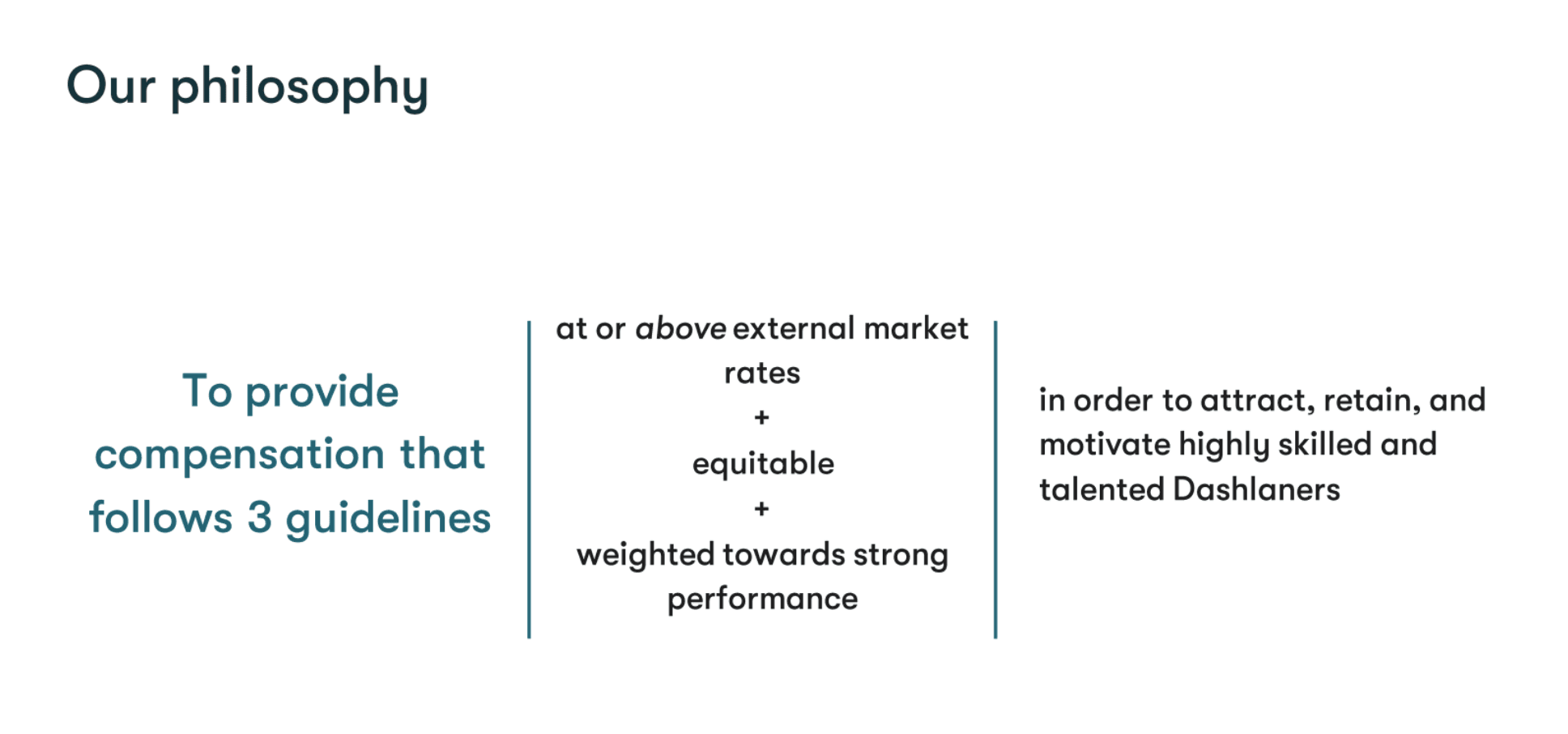
In simple terms, a philosophy is a statement of what you believe in when it comes to compensation as well as guidelines that guide your decisions. Having a philosophy is the north star that lets you create a compensation structure consistently and transparently. When you have clarity, you can easily explain to candidates and employees why they get paid what they do.
Some questions you might ask yourself:
How competitive do you want to be vs. the market
Do we give everyone equity or just some roles
Do we adjust salaries based on location
How do you determine what you pay within a salary range
Example from Dashlane:
Elements of Compensation
The main components of a startup's compensation are base and equity. For some roles, such as sales and customer success, you’ll want a variable piece based on quotas. In super early stages, it’s common to avoid bonuses as it’s hard to tie them directly to performance when the work is ever-evolving. If you feel strongly that you should have a bonus structure, make them structured. Everyone in the same role has the same bonus percentage, and pay them all at the same time. Generally, at the beginning of the fiscal year.
Some companies like to think about perks and benefits as part of their compensation structure as well, especially if they have generous 401k plans or stipends. You might hear people refer to this as Total Rewards.
Let’s dig into base and equity. In the early days of a start-up, cash is the most limited resource. So many companies will try to be middle-of-the-road in cash and put more weight on equity. When you look at compensation data, this might mean looking at a certain percentile range.
For example:
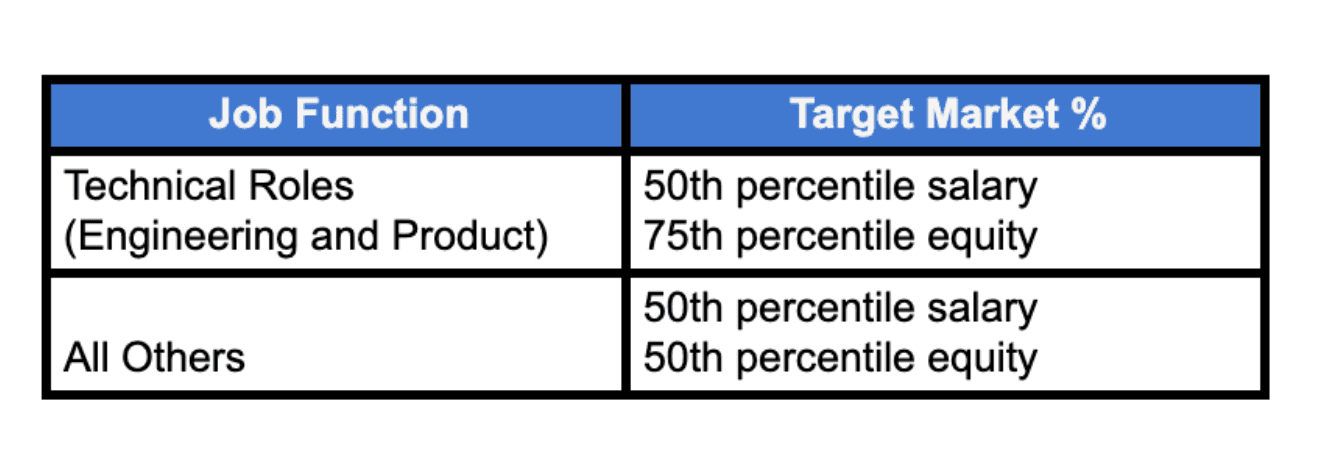
When looking at compensation databases, you might need to slice the data in a way that makes sense to you. Typically we see the data cut by funds raised or # of employees.
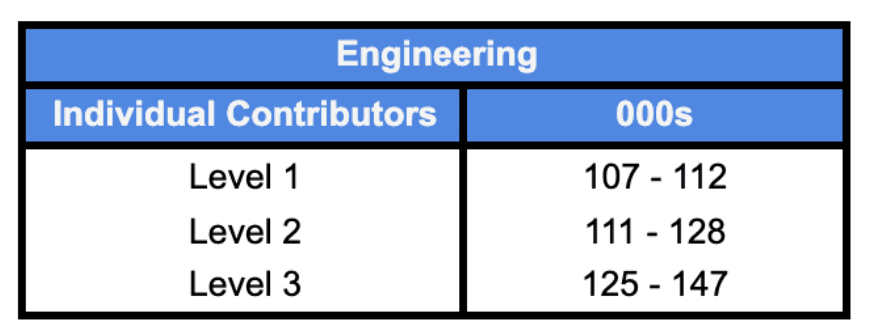
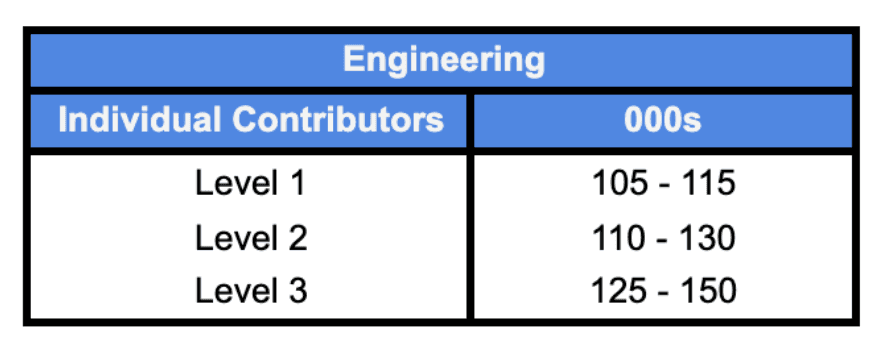
Also, compensation is an art and a science. The data will get you most of the way there, but you may want to make it look a little cleaner. For example:
What the data may look like:
How you might want to structure it:
When it comes to equity, you might want to go a bit higher than average. 60th to 70th percentile is not uncommon. Four-year vesting with a one-year cliff is the most common way to structure it.
Architecture
Job architecture is how you organize your roles. In its most basic levels, you take into account the function (Engineering, Product, Sales) and the Level or Seniority (Senior, Staff, Head of, VP), to create a matrix.
Having a good job architecture will help you make hiring, compensation, promotion, and performance decisions in a streamlined and consistent way. Take a look at the example rubric below:
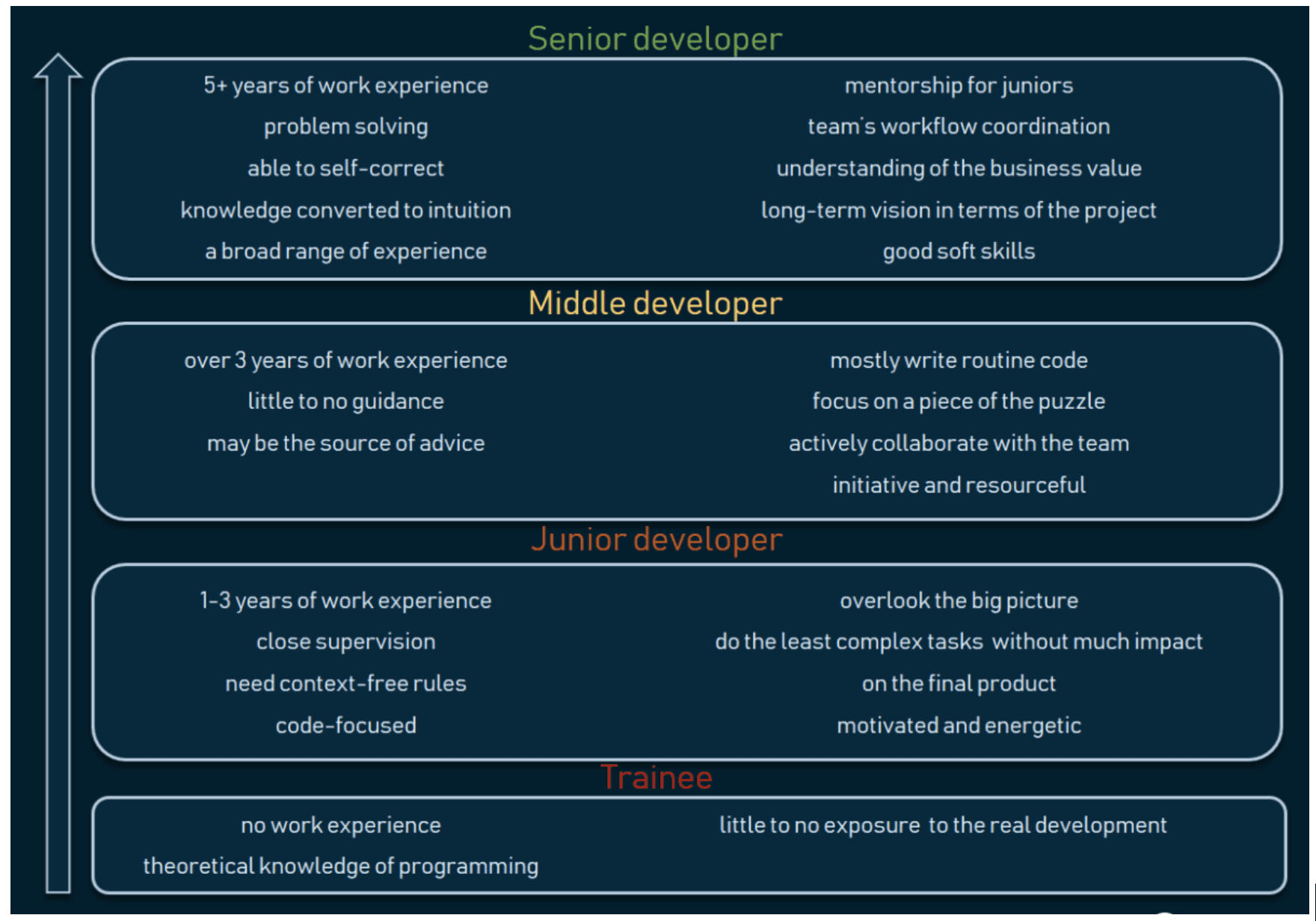
As you plan your fiscal year, you might decide that you need to hire a Jr. developer. You know that your compensation range is 105 to 115k, which makes crafting an offer a bit easier. You make an offer at 110 to give yourself room to give a bump if they are not ready for a promotion. How do you decide on the promotion? You look at the middle developer rubric and see if the person is performing at that level. Having these levels can also help as you have career conversations with the team.
Leveling
This is basically the seniority that you might have for different roles. There’s no set way to do leveling, and it varies from company to company. Here are some examples from larger organizations.
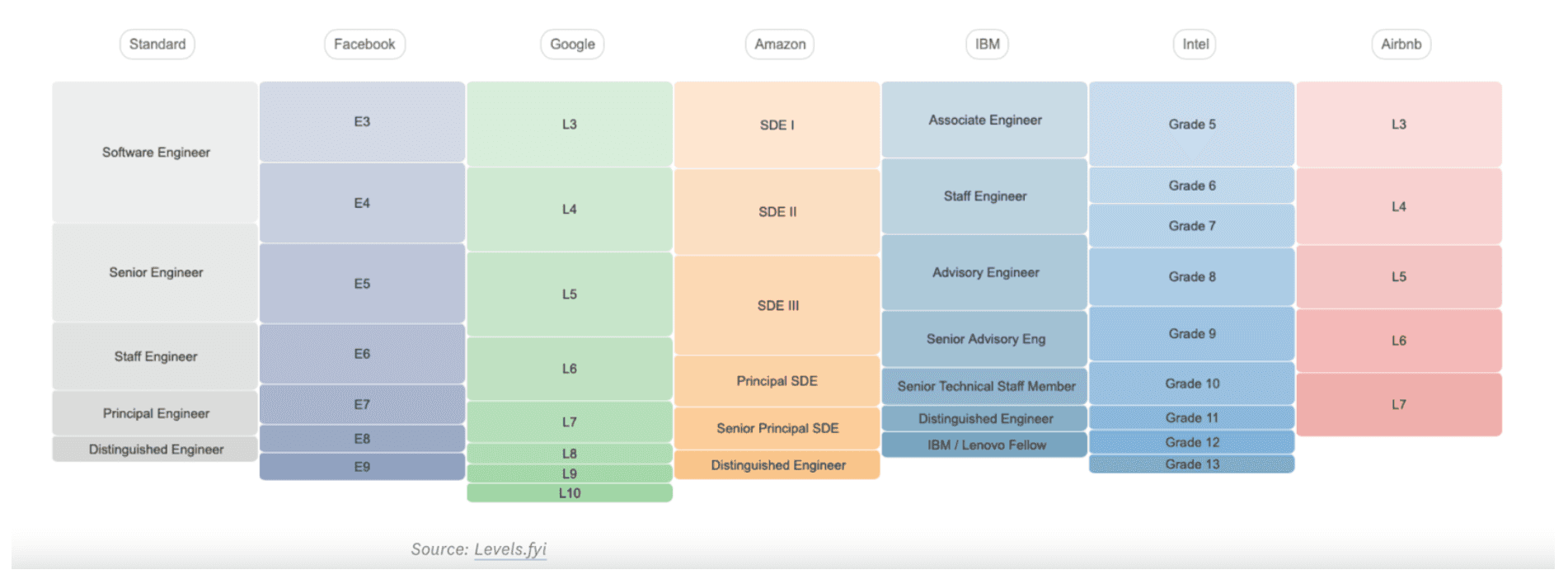
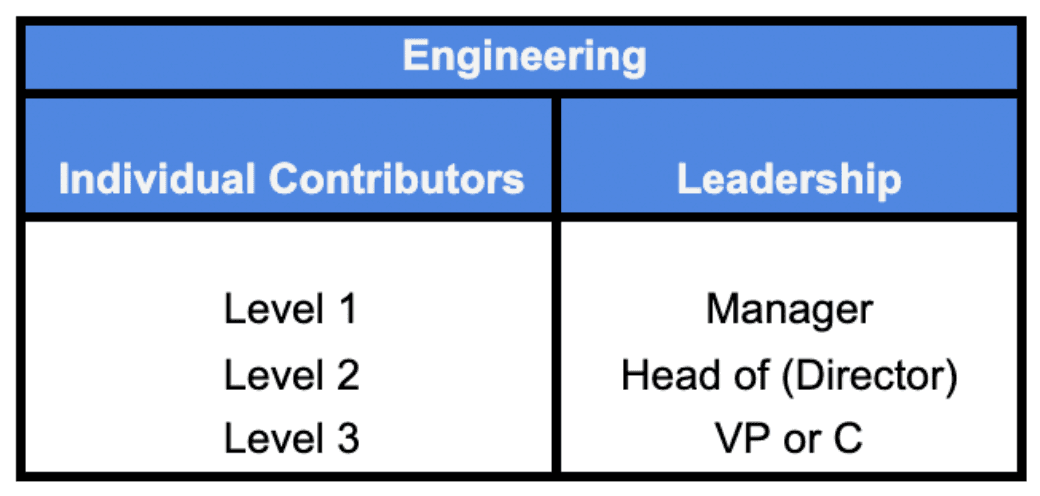
For an early-stage startup, you will usually see fewer levels and generally have a flatter organization with employees wearing many different hats. As companies grow, these levels become more complex. It’s best practice to start with three levels for individual contributors (ICs) and 3 for the management structure. This is simple enough for the early days and can help you scale to a few hundred employees.
For example:
Function
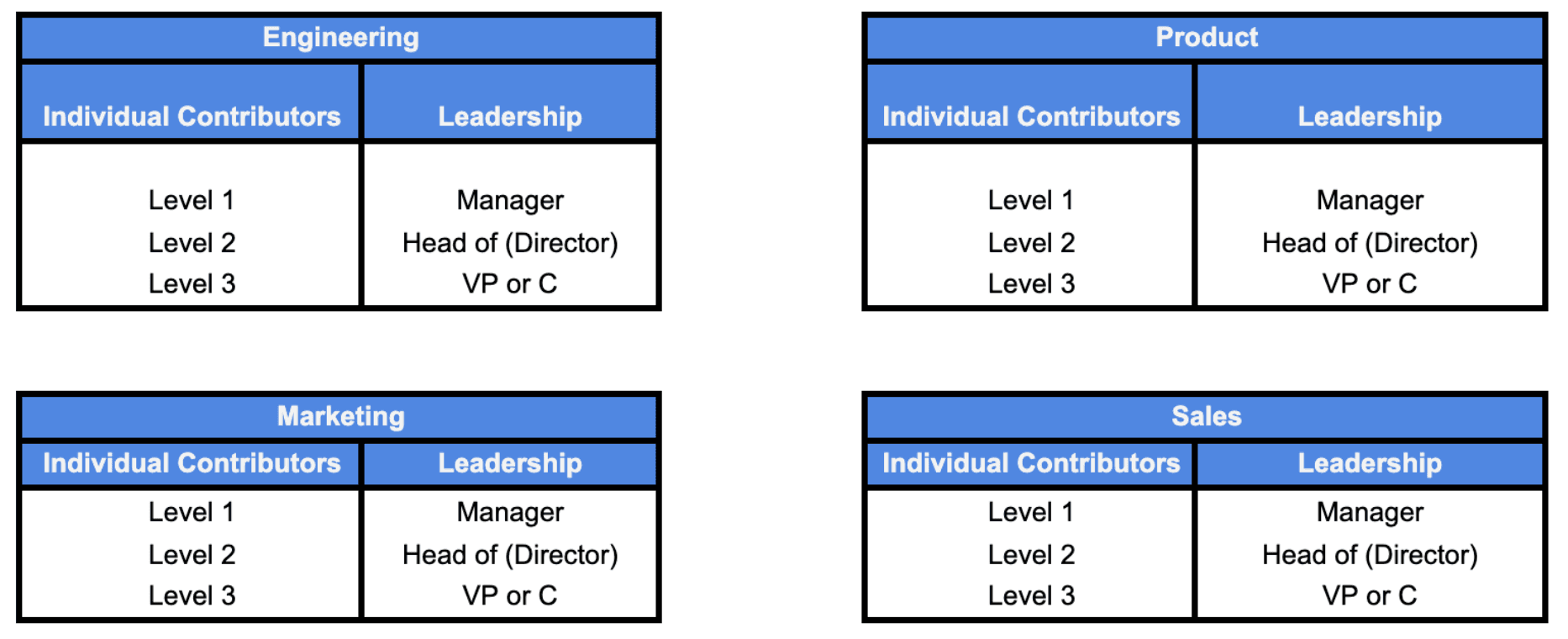
Function aligns broadly with what the role will do. In the early days of a start-up, you’ll want to stay as simple as possible (One comp structure for Marketing, for example). As the company grows, you’ll find yourself becoming more specific (Brand Marketing vs. Demand Generation). For those first 50 to 100 employees, you will likely need Engineering, Product, Design, Sales, Marketing, Operations, and Support.
At the end of the day, your job architecture will look something like this:
Putting it all together
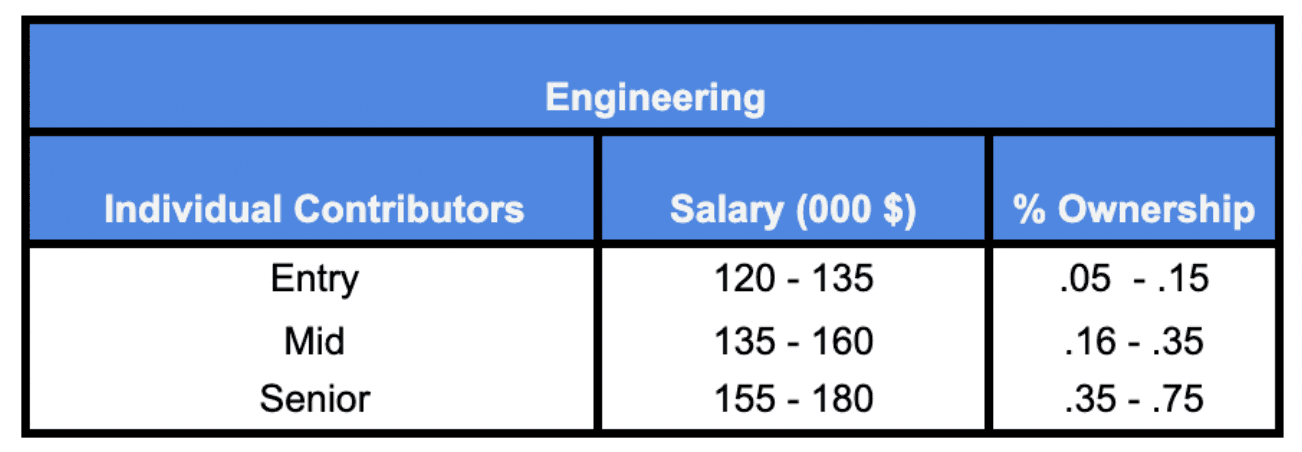
Once you combine your comp philosophy with your architecture, you will have an easy and simple framework for making compensation decisions that is consistent and transparent.
It will look something like this:
Putting it into practice
Offers
You have found that perfect candidate, and you are ready to make an offer. Congratulations!
Here are some tips to help you succeed:
Give the offer in person or over zoom. The more fidelity you have in the communication, the more you will be able to read the person’s response to the offer in an immediate way
If you haven’t already, start by explaining your compensation philosophy. People like to know that you have put some thought into the offer and that it will be consistent with others. If you are talking to candidates that are coming from larger companies, this is your chance to explain how compensation at a start-up might look different than what they are used to. Generally less cash and more upside potential!
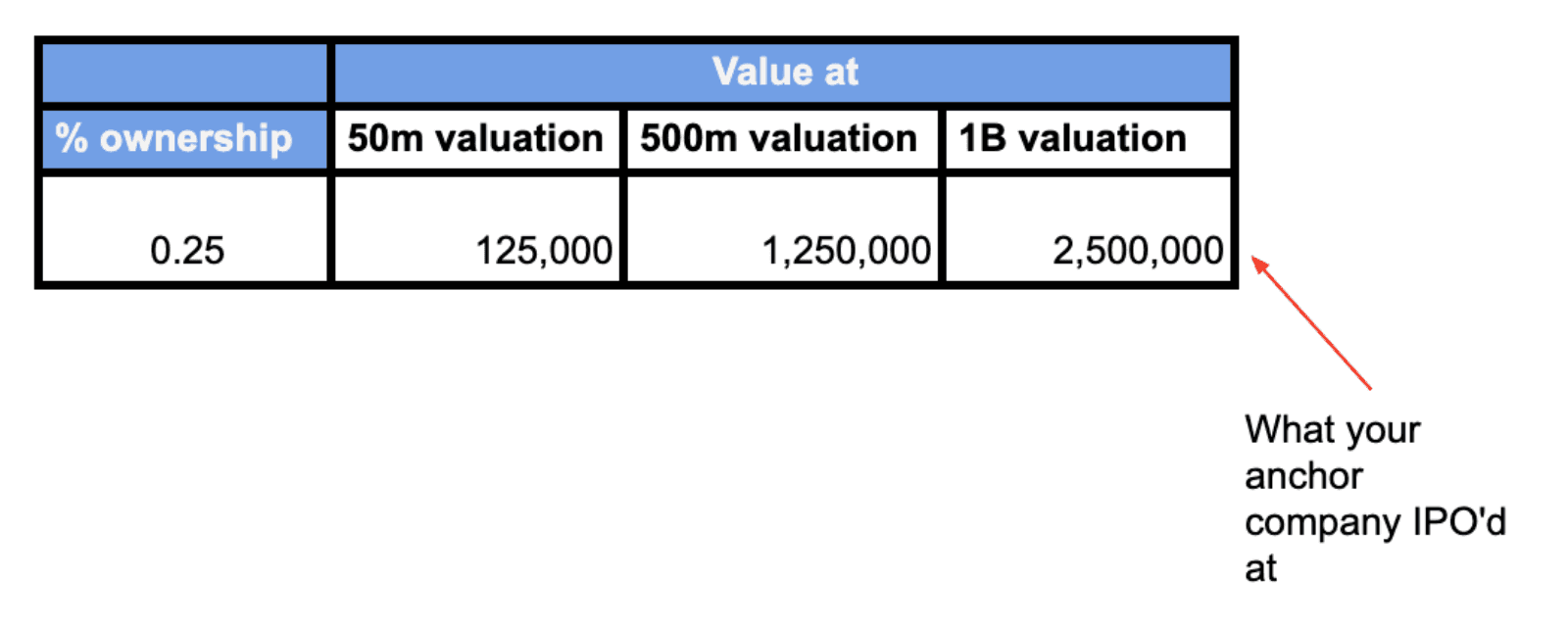
Speaking of upside potential, it’s important that you communicate the value of the equity not just in what is today but also in what it could be worth in the future. A few ways to do this:
For example:
Increases
Your team will expect to have increases in their compensation, and you want to make sure you develop a solid system for how this happens.
Here are some recommendations:
Do them twice a year. More than that, it becomes burdensome. Less than that might not be sufficient for an ever-changing start-up
Refresh your market data at least annually. Things can change quickly, and you want to ensure you’re staying competitive
Tie increases to performance (but ensure you’re evaluating performance, not just during increases). Performance, career growth, and pay conversations should happen separately
Have a compensation band to increase someone’s compensation without promoting them. A 4% to 7% increase is generous
You might want to include an equity bump if someone gets promoted. Generally, the difference between the midpoint of the Jr. role and the Sr. role is a good place to start
Document your compensation decisions
If you have people who have been with you for two or more years, you might want to consider equity refreshers. The box-car approach is pretty easy to implement and explain at the early stages of a start-up. A new equity grant is usually offered in year 2 or 3 of employment that won’t begin vesting until after the 4-year grant concludes. So, the vesting schedules look like boxcars - clever.
And, of course, anything you put in place should be against the backdrop of your operating budget and equity pool. Generally, you’ll want to model your hiring for the next 6 to 12 months and adjust accordingly.